
2026-09-18 · Derek Ellis
How to Tell If Water Has Spread Under Flooring or Behind Walls
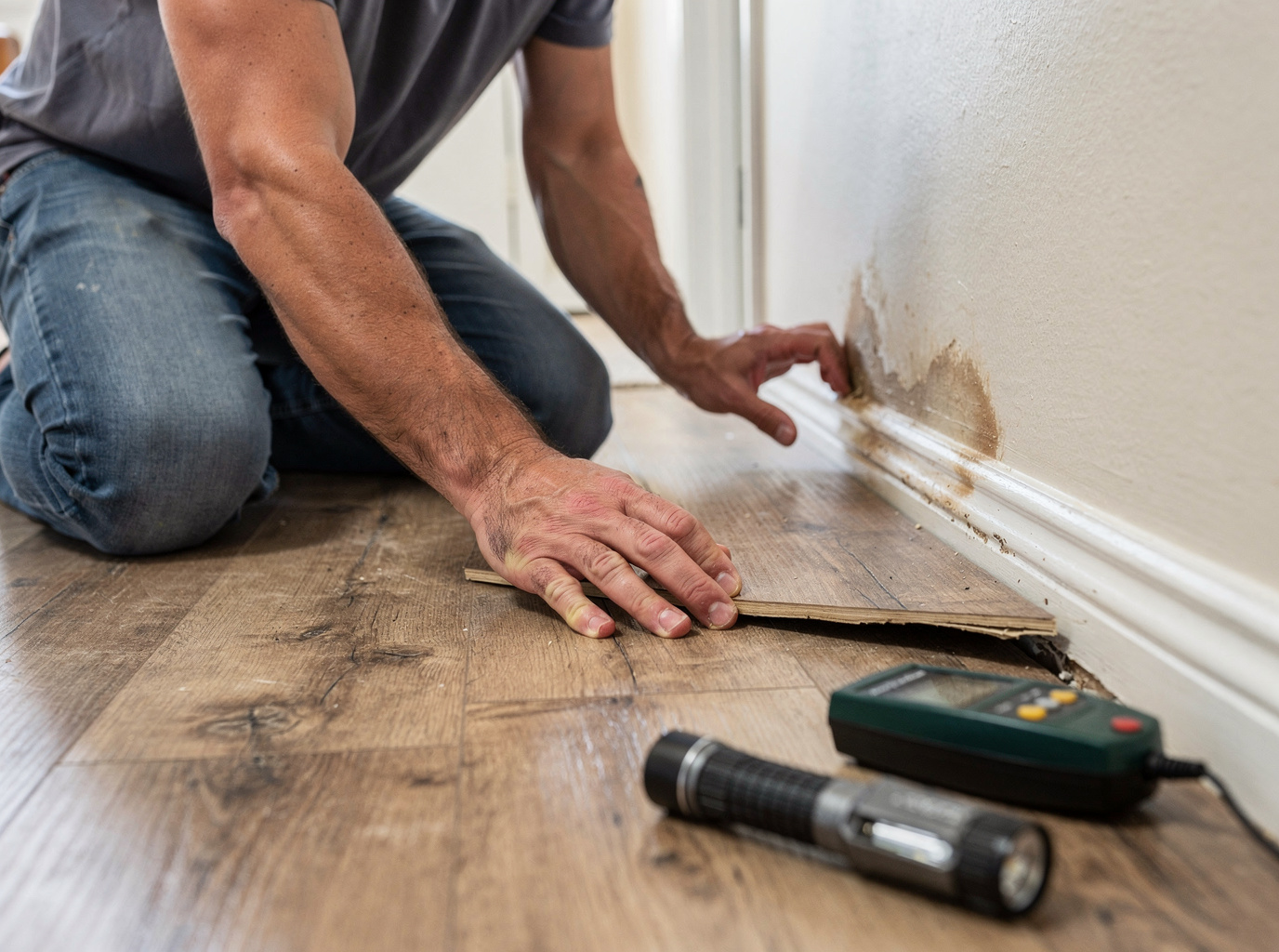
In Rockwall homes, water from storms or Lake Ray Hubbard overflows typically spreads 4–12 inches under flooring and 8–18 inches up behind walls within the first 48 hours. Check for soft spots by pressing firmly with a screwdriver handle along baseboards and at door thresholds in rooms that received water. Warped baseboards, musty odors near outlets, and discolored grout lines signal trapped moisture that must be addressed before the next humid summer cycle.
Flooring Inspection Steps
Start at the lowest point of the affected room and work outward. Lift one corner of carpet or vinyl in 6-inch increments and feel the subfloor for cool or damp patches. In Rockwall’s older Downtown Rockwall neighborhoods, many homes built before 1990 have particleboard subfloors that swell and crumble after just 24 hours of saturation. Use a moisture meter on exposed wood; readings above 18% indicate hidden water that normal fans will not reach. Tile floors over concrete slabs common near Harry Myers Park can hide water in the grout lines for weeks because the slab holds temperature and slows evaporation.
Numbered checks help avoid missing pockets. 1. Walk the room and note any springy feel underfoot. 2. Tap the floor with a rubber mallet and listen for hollow sounds. 3. Check under appliances and toilets where water pools longest. 4. Pull back quarter-round molding to inspect the seam between floor and wall. These steps reveal water that traveled from burst pipes or storm runoff before it reaches adjacent rooms.
Wall Cavity Checks
Water climbs wall cavities through base plates in Rockwall’s mild winters when indoor humidity stays elevated. Remove outlet covers on exterior walls and shine a flashlight upward; look for water lines or darkened insulation. In the Lake Ray Hubbard Area, homes with brick veneer often trap water between the brick and sheathing after heavy rain events that also affect Garland and Dallas. Press a moisture meter probe into drywall 4 inches above the baseboard; sustained readings over 15% mean the cavity needs professional drying equipment rather than household dehumidifiers.
Pay special attention to bathrooms and laundry rooms where leaks start. In homes around Rockwall Harbor, plumbing walls run parallel to exterior walls, allowing water to travel unseen into living areas. Cut a small inspection hole at the bottom of the wall if meter readings stay high, then seal it after confirming the extent of saturation.
Local Weather and Housing Factors
Hot humid summers in Rockwall push relative humidity above 70% for weeks, slowing natural drying of hidden water. Homes in The Shores and Chandlers Landing sit on clay soils that hold moisture against foundations, increasing the chance water migrates under slabs and into flooring. Older stock near Breezy Hill often lacks vapor barriers, so water behind walls stays damp longer than in newer construction. These conditions make early detection critical before microbial growth begins in 48–72 hours.
See our guide on What to Do After Flood Water Enters Your Rockwall Home for next steps once hidden water is confirmed. For properties that experienced storm runoff, review Heavy Rain and Flash Flooding in Rockwall: Where Water Can Travel Indoors to understand common travel paths.
When Professional Equipment Is Required
Household fans and dehumidifiers rarely pull moisture from under flooring or inside wall cavities in Rockwall’s climate. Professional structural drying and dehumidification uses air movers rated at 3,000+ CFM and low-grain refrigerant dehumidifiers that drop indoor humidity to 35%. Technicians place sensors inside walls and under floors to confirm moisture levels drop below 12% before closing cavities. This process typically takes 3–5 days depending on the volume of water and the home’s insulation type.