
2026-09-18 · Derek Ellis
What Gets Wet After a Burst Pipe and What Needs Drying?
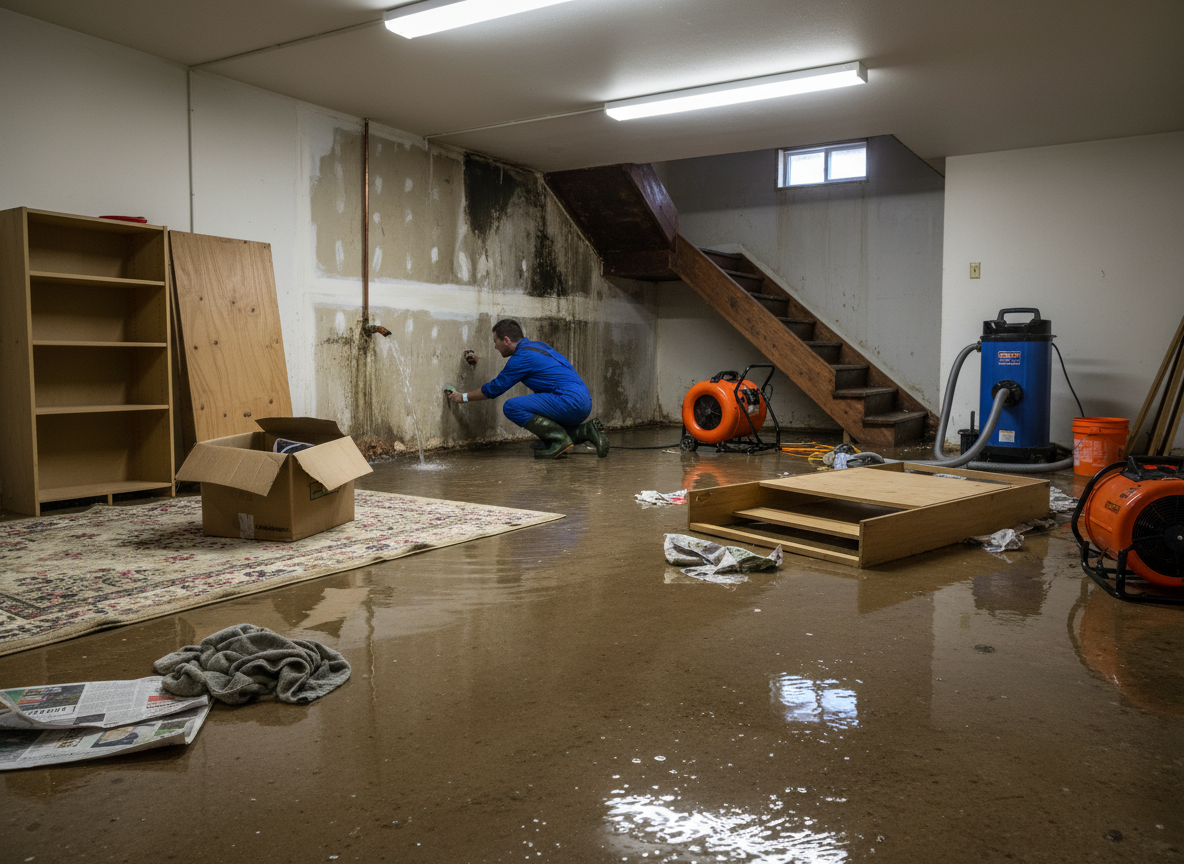
After a burst pipe, water immediately saturates the floor covering and subfloor within a 3- to 6-foot radius, wicks 12 to 18 inches up drywall, and soaks any cabinet bases or built-ins along the same wall; the drying process must address these zones plus any cavities where moisture travels behind trim or under toe-kicks.
Flooring and Subfloors
In Rockwall homes built before 1990, especially those near Downtown Rockwall and the Lake Ray Hubbard Area, hardwood or laminate often sits over plywood subfloors that absorb water quickly. Once saturated, the plywood swells and cupping appears within days. Extraction crews pull baseboards, create airflow under the flooring, and run dehumidifiers sized for 1,200-square-foot sections. Hot humid summers here raise indoor humidity to 70 percent, so drying times stretch from 5 to 8 days instead of the 3 days common in drier climates like parts of Garland. Leaving trapped moisture leads to cupping that requires full replacement.
Wall Cavities and Insulation
Water travels upward inside walls through the bottom plate and soaks fiberglass batts or blown cellulose. In single-story ranch homes common around Harry Myers Park, this hidden saturation often reaches 24 inches high. Moisture meters read above 18 percent before drying begins. Technicians cut small inspection openings, place air movers inside the cavity, and monitor until readings drop below 12 percent. Structural drying and dehumidification equipment runs continuously because mild winters still bring enough moisture to restart mold growth if cavities are closed too soon.
Cabinets, Vanities, and Built-ins
Base cabinets along a burst pipe line absorb water through the particleboard sides and toe-kicks. In kitchens near Rockwall Harbor, this often affects the dishwasher and sink areas first. Drawers and doors must be removed, and any particleboard showing above 15 percent moisture is cut out. Drying focuses on the remaining solid wood frames with directed airflow. Homeowners in The Shores neighborhood report that skipping this step leads to swelling that ruins countertop seams within two weeks.
Hidden Travel Paths Under Flooring
Water follows the slope of the slab or crawl space toward lower points, sometimes traveling 10 to 15 feet into adjacent rooms. In Lakeside Village properties built on slight grades toward Lake Ray Hubbard, this movement is common. How to tell if water has spread under flooring or behind walls explains the meter and infrared methods used locally. Crews map the full wet footprint before starting drying so no pockets remain under thresholds or in closets.
Why Local Climate Changes Drying Plans
Rockwall's hot humid summers keep relative humidity above 65 percent for weeks, slowing evaporation from porous materials. Mild winters reduce natural drying but do not eliminate the need for mechanical dehumidification. After extraction, crews maintain 75-degree air and 45 percent humidity targets for 72 hours minimum. What to do after flood water enters your Rockwall home covers the first 24-hour decisions that affect how quickly these materials can be dried without demolition.